Young and active after valve treatment
April 6, 2026
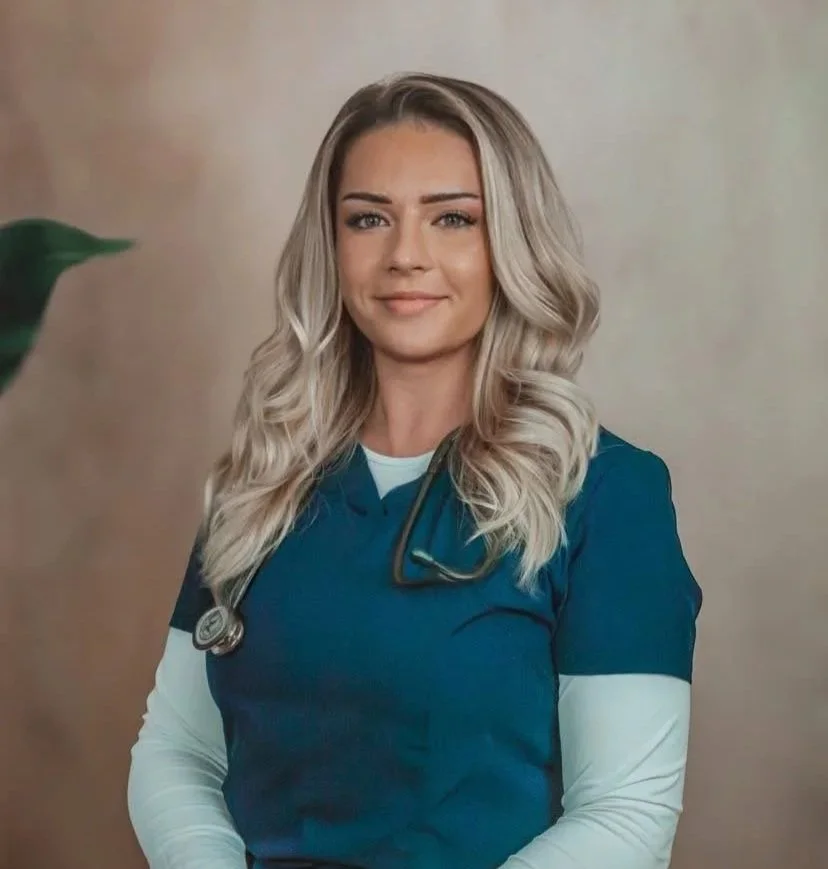
Stephanie Morgan always knew she had a heart murmur. It was due to a bicuspid aortic valve, with two leaflets instead of the usual three. Growing up, Stephanie saw a cardiologist every year to check on her valve.
It didn’t slow her down. At school in the Montreal suburbs, she played basketball and flag football; she loved dancing and swimming too. Stephanie knew that she would probably need heart surgery one day, but that was likely decades away, in her 40s or 50s.
Then, on the weekend of her 19th birthday in December, 2014, she fainted while playing in a basketball tournament. That was the beginning of a journey that moved faster than anyone expected. Stephanie shared her story with Heart Valve Voice Canada.
What happened after you fainted?
Throughout that weekend, I felt my health going downhill. I was afraid I would faint again when I tried to take a shower; I could barely make it up the 10 stairs in our house.
At first, I thought I might have just overdone it celebrating my birthday. But it started to seem like something bigger. On Monday morning. I told my parents I was feeling better, so they wouldn’t worry; they went to work. I was planning to go to school, but felt so off that I decided to go to emergency.
It was an hour and a half into Montreal by bus and Metro. When I got to emergency, I was exhausted and breaking out in a sweat. They did an electrocardiogram and told me I might need heart surgery for my valve.
They asked if there was someone I could call. I said, “Well, my mom works upstairs.”
That must have been a shock — for you and your mom.
My mom was totally in shock when they called her and said: “Everything's fine, but we just need you to come down. Your daughter's here.” And of course, neither of us expected that I would need valve replacement surgery this young.
But I could feel that I wasn't myself. And I knew that if the valve was causing me to feel this way, I didn't have a choice.
So, from that moment on, I took it upon myself to be as informed as possible, and not let anxiety make things more stressful than they already were. I just couldn’t wait to feel better again.
How did you decide on the type of replacement valve to get?
We had a meeting where my medical team spoke about the pros and cons of a bioprosthetic valve or a mechanical valve. I had already done a lot of research on my own.
I went in with a clear idea that I wanted a bioprosthetic valve. With a mechanical valve, you have to take anticoagulants (blood thinners). Knowing myself, I knew that it would be hard for me to take those drugs consistently every day. My schedule was all over the place. Also, they mentioned that playing basketball might be too much of a risk; boxing, which I also loved, would be a definite no.
Initially they were recommending the mechanical valve, which would last longer. But I told them my reasons why I didn't like it, and they said, “That's fine, we'll go ahead with the bioprosthetic valve.”
I didn't mind that I would have to go through another valve replacement in the future. I just wanted as much of a normal life as possible.
After the surgery, what helped in your recovery?
It was difficult for the first few days because it turned out I had an intolerance to morphine, which made me nauseous. Once they figured that out, the team acted quickly to get the nausea and vomiting to stop. It was really painful until they were able to give me something different to control pain.
After that, things went well. In the cardiac ward, as I started walking around, people stopped me and said things like, “Oh, you’re the 19-year-old who just went through heart surgery!”
After I went home, there were no suitable cardiac rehabilitation programs available. I joined some Facebook groups with other valve surgery patients, to learn what helped them recover. I started doing some physical activity; to find the right level, I just listened to my body.
If I tried to do too much, I would feel exhausted and might have to spend the next day in bed. I quickly learned my limits and tried to do as much as I could, without pushing it.
How did your life change after getting a new aortic valve?
I think it was probably around the six-month mark, it just hit me that I was feeling really good. I was able to go to work, and come home and make dinner for my family. And I was like, “Holy moly, I still have energy left!”
All the pain and struggling and everything up until that moment was all worth it, just to feel like I'd come back to normal again.
So, nine years pass and you’re feeling good, keeping fit and active. What changed?
I was working at a hair salon at the time. As I was sweeping the floor, suddenly everything became really blurry around me. I was dizzy and out of breath; I felt palpitations, and my legs felt heavy.
I sat down, but when I got up again, the same thing happened. My employer asked if maybe I was having a panic attack. But I knew this was different. So, after I went home, my mother took me to a local hospital.
They did some basic tests and said everything seemed fine. They wanted to send me home. I said, respectfully, that I knew something was going on. After a few more tests, the doctor said, “Well, we might see something, but we're not sure what it is.” They transferred me to the hospital where my cardiologist worked.
There, during an ultrasound of my heart, the technician said, “Did anyone tell you that your valve is due to be changed?”
I was surprised he said this. In previous tests, technicians would never share results. But he just said, “Oh, I've been doing this long enough to know that I'm not wrong.”
So, you had a decision to make about another valve replacement.
Yes. Through the Facebook groups, I had seen more and more people discussing TAVI (transcatheter aortic valve implantation). It would mean using a catheter to implant a new bioprosthetic valve inside my existing valve. I would not have to go through open-heart surgery.
After discussing it with my medical team, I went through tests to see if I met the criteria for TAVI. They confirmed that everything was good. My aorta was dilated a little bit, and in the future, I might not have the TAVI option. So I said I wanted to do a TAVI now.
From that moment on, they told me that if I needed to go to the hospital for anything, I should mention that I was being followed by the TAVI team, and I would have a fast track. That was really reassuring for the months leading up to the procedure.
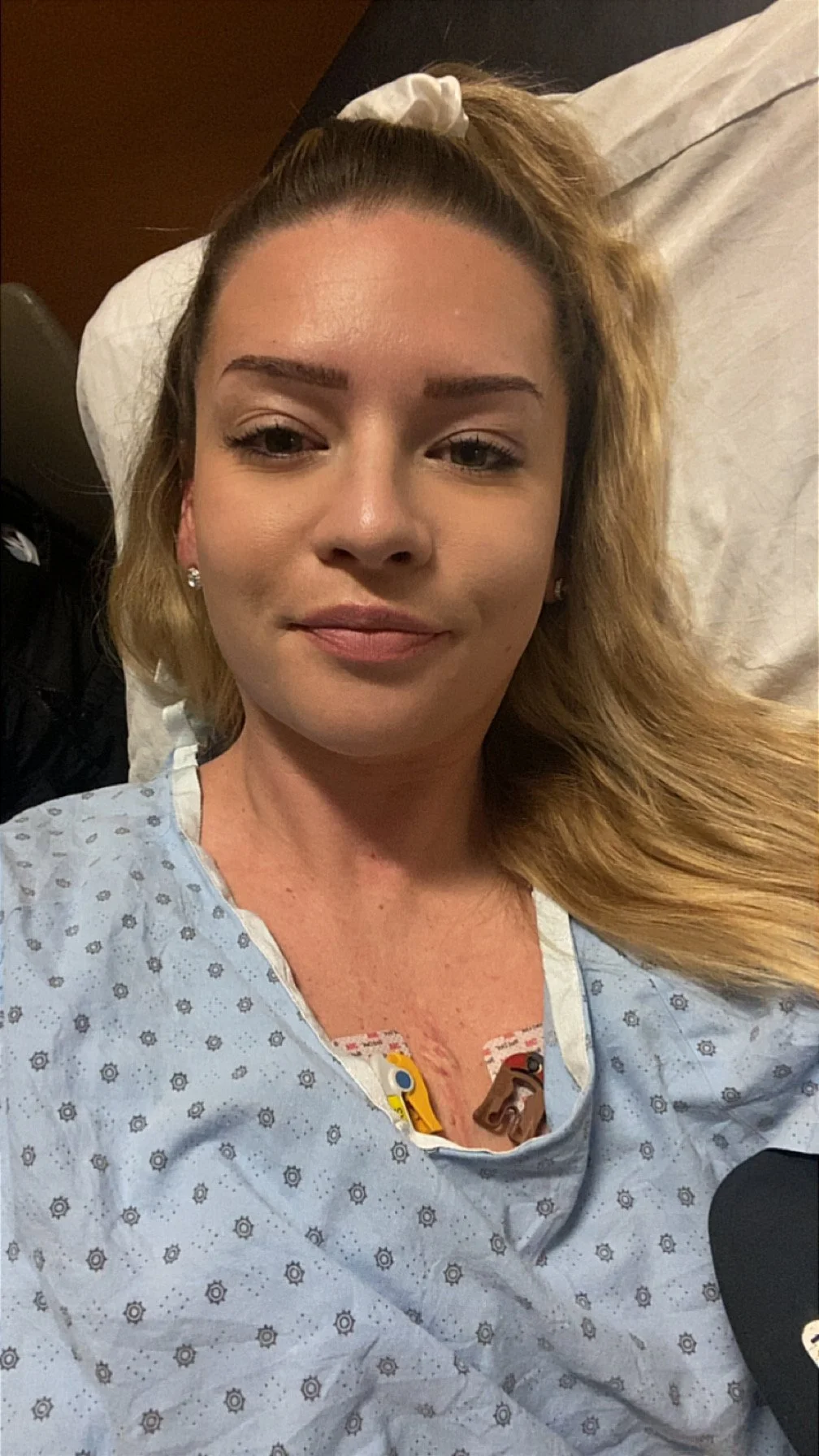
Stephanie after her TAVI procedure.
How did recovery go after the TAVI procedure?
The next day, I remember sitting in my bed, thinking, “Wow, less than 24 hours ago, I was having my valve replaced, and now I'm back home.” It was so different from the open-heart surgery.
About a month and a half after my TAVI, I attended my first hot yoga class with my sister-in-law. In about three months, I was back to boxing.
That all happened in 2023. How are you feeling today?
Having this valve replaced has meant the world to me. It’s allowed me to try new things and not even think about if my heart can take it or not.
I know the signs of a valve that is starting to deteriorate — such as dizziness, breathlessness and fainting. But until that starts happening, I like to give myself the chance to try something. if it doesn't feel right physically, then I won't go back to it, but at least I know that I gave it a try.
I've completed my nursing diploma, and I’m applying to become a paramedic. The instructors have told me, “If you can pass the physical test, then we're not in a position to tell you that you can't do the job.”
So I've started training for the physical tests. I just insist every day on not letting my heart be a factor in whether I can do something or not.
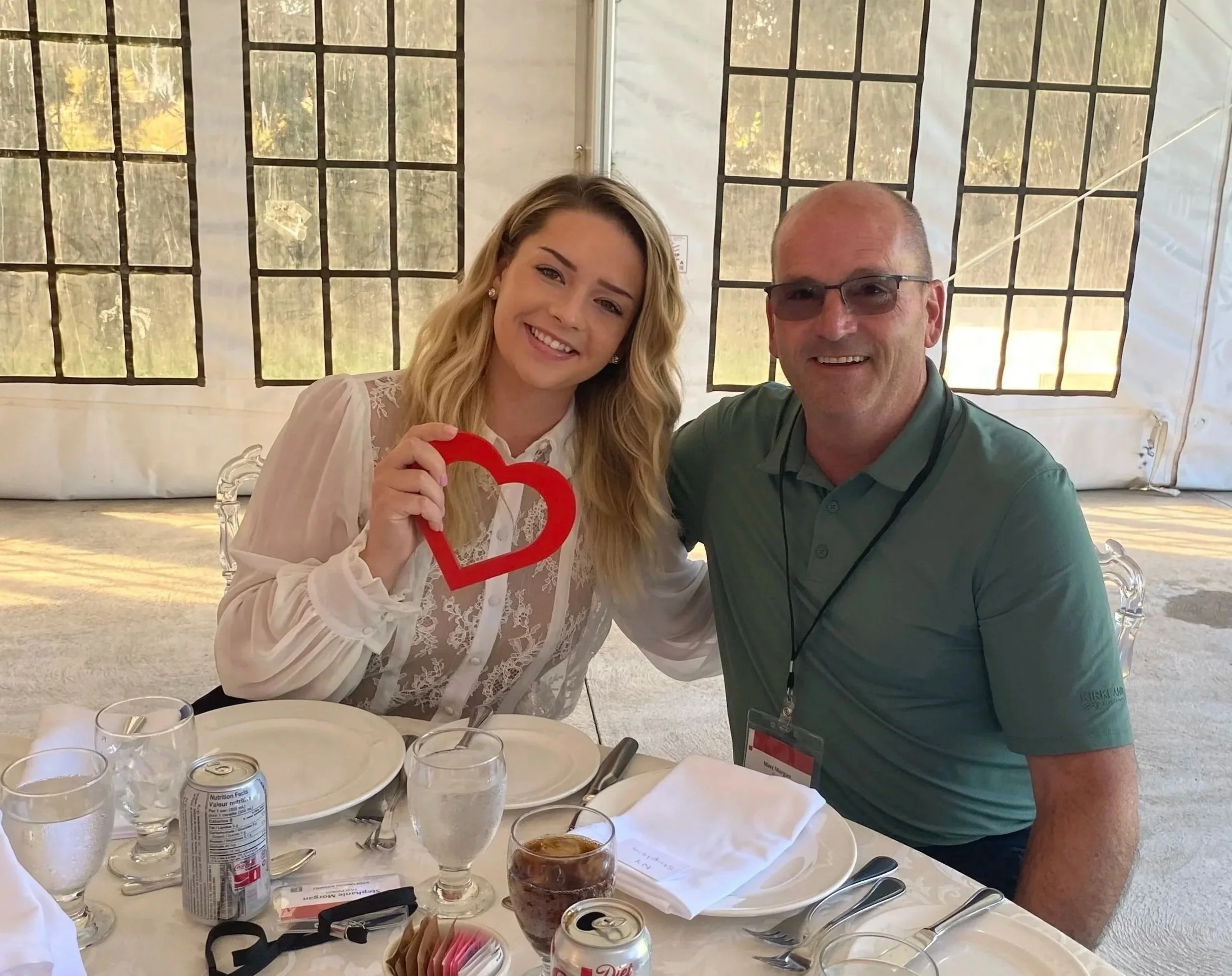
Stephanie and her father attend an event for people with valve disease.
What do you wish more people knew about valve disease?
I’ve run into some people along the way — including sports teammates and past boyfriends — who made unfair assumptions about me when they learned I had had valve surgery. That bothered me, the lack of knowledge that led them to place their own limitations on me.
For myself, as a younger person who's gone through heart surgery and is feeling good, I want people to know that you can have a very normal life living with valve disease. It doesn't have to be a burden. There is an opportunity to live a beautiful life full of adventure and new things to discover, even with valve disease.
By sharing my story, if it helps even one young person feel less alone or more hopeful about facing valve disease, then it’s absolutely worth it.